Engine Start: Start the engine for approximately 10 minutes or until the engine reaches normal operating temperature. Turn off the engine.
Disconnecting Spark Plugs: Disconnect the spark plug wire from the first cylinder and mark the cylinder number on the wire. Remove the spark plug and place it on a clean surface. Check the spark plug condition. Replace if necessary and clean the spark plug hole.
Check Spark Plug Condition: Note: The condition of the spark plug can also indicate the condition of the cylinder and compression pressure.
Disconnecting the Central High Tension (HT) Lead: Disconnect the central HT lead from the distributor and ground it. For electronic ignition systems, remove the electronic ignition device or ignition coil. For GM high-energy ignition (HEI) systems, disconnect the main wire from the distributor cap.
Compression Pressure Test
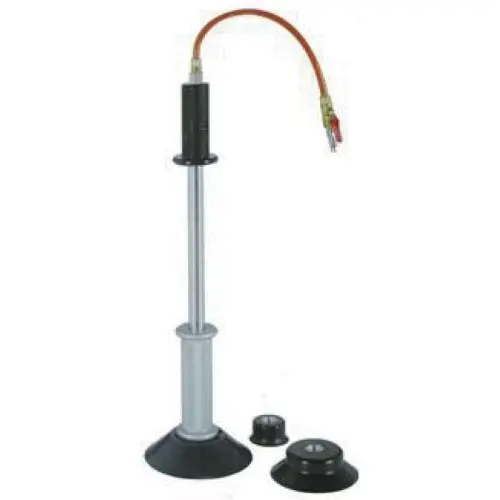
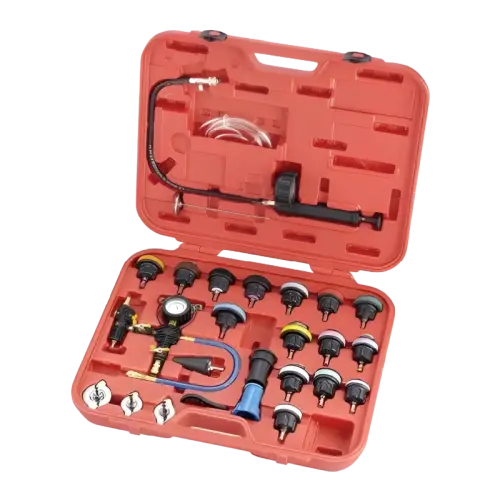
Method A: Choose a suitable adapter and connect it to the rubber test hose. Screw the adapter and rubber test hose onto the spark plug hole.
Method B: Choose a suitable aluminum test tube. Install the aluminum test tube on the spark plug hole. Note: When using the aluminum test tube (angled or straight), one hand must hold and press the test tube against the spark plug hole at all times.
Connect the gauge to the rubber test hose or aluminum tube.
Start the engine to run at least 4 compression strokes or until the pressure gauge reading stabilizes at a fixed level.
Record the pressure reading.
Press the pressure release button before disconnecting from the cylinder.
Reinstall the spark plug and wire back to the cylinder.
Test other cylinders one by one and compare the test results.
Test Results
The pressure should rise after each compression stroke and then reach a maximum under normal conditions.
The pressure of each cylinder in the same engine should follow the standards set by the auto manufacturer.
If the pressure does not rise after several compression strokes, the valves could be clogged.
The highest pressure and the lowest pressure should not exceed 20 psi or 15% difference.
If the pressure is much higher than the standard set by the manufacturer, there could be carbon deposits.
If the pressure in one cylinder is significantly lower than other cylinders, put a teaspoon of SAE30 engine oil into the cylinder.
If the pressure increases significantly, the piston rings could be worn out or the cylinder head is not properly installed.
If the pressure remains the same, the valves could be worn out or need adjustment.